The creation of an Applied Artificial Intelligence Laboratory through an alliance between Universidad Técnica Federico Santa María (USM) and Raven opens a new chapter for collaboration between academic knowledge and industry in Chile.


28 de January 2026
5 min


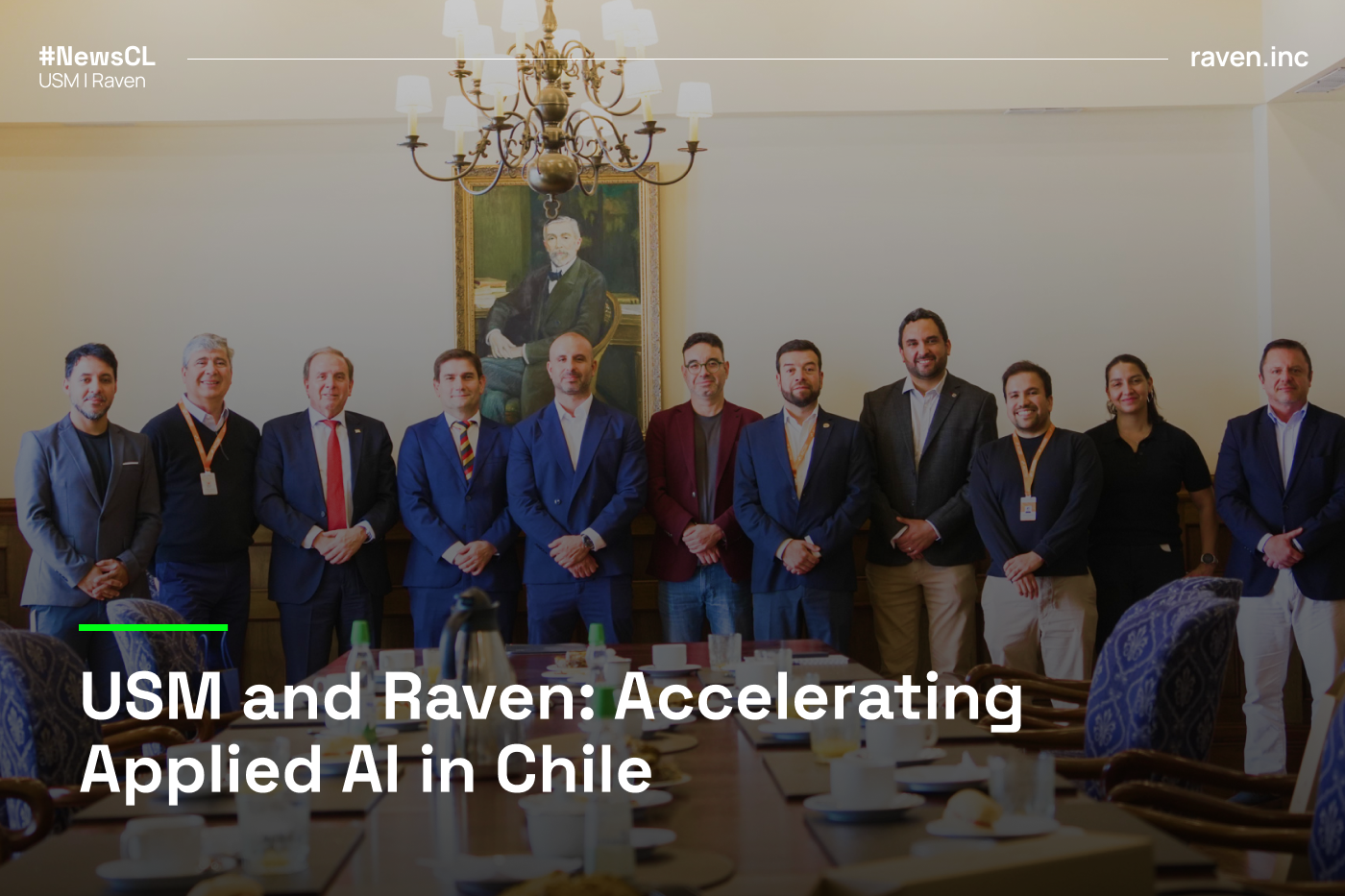
The creation of an Applied Artificial Intelligence Laboratory through an alliance between Universidad Técnica Federico Santa María (USM) and Raven opens a new chapter for collaboration between academic knowledge and industry in Chile.
For years, the conversation around technological innovation in the country has repeated the same idea: there is talent, there is knowledge, and there is technical capability. Yet these worlds do not always converge. Academia conducts research, industry faces urgent and complex problems, and the point where knowledge becomes real-world impact is often fragile - or missing altogether.
In this context, the recent alliance between USM and Raven to establish an Applied Artificial Intelligence Laboratory represents a significant development for Chile’s technology ecosystem. Not only because of the announcement itself, but because of what it seeks to redefine: a different -and necessary- approach to developing artificial intelligence in the country.
Universities play an irreplaceable role: generating deep knowledge, training highly skilled professionals, and pushing the boundaries of research. However, that knowledge does not always find a direct path to practical application.
Industry, on the other hand, operates under different rules. It is immersed in real-world problems, constrained by time, budgets, and results. Many organizations know they need artificial intelligence, but struggle to translate that need into concrete solutions - especially when challenges are complex and require specialized expertise.
This initiative is not about one world replacing the other, but about complementarity - recognizing that today’s challenges demand real, sustained collaboration.
Talking about applied artificial intelligence is not about trends or promises. It is about systems that work, models trained with real data, and decisions that impact productive processes, services, and people.
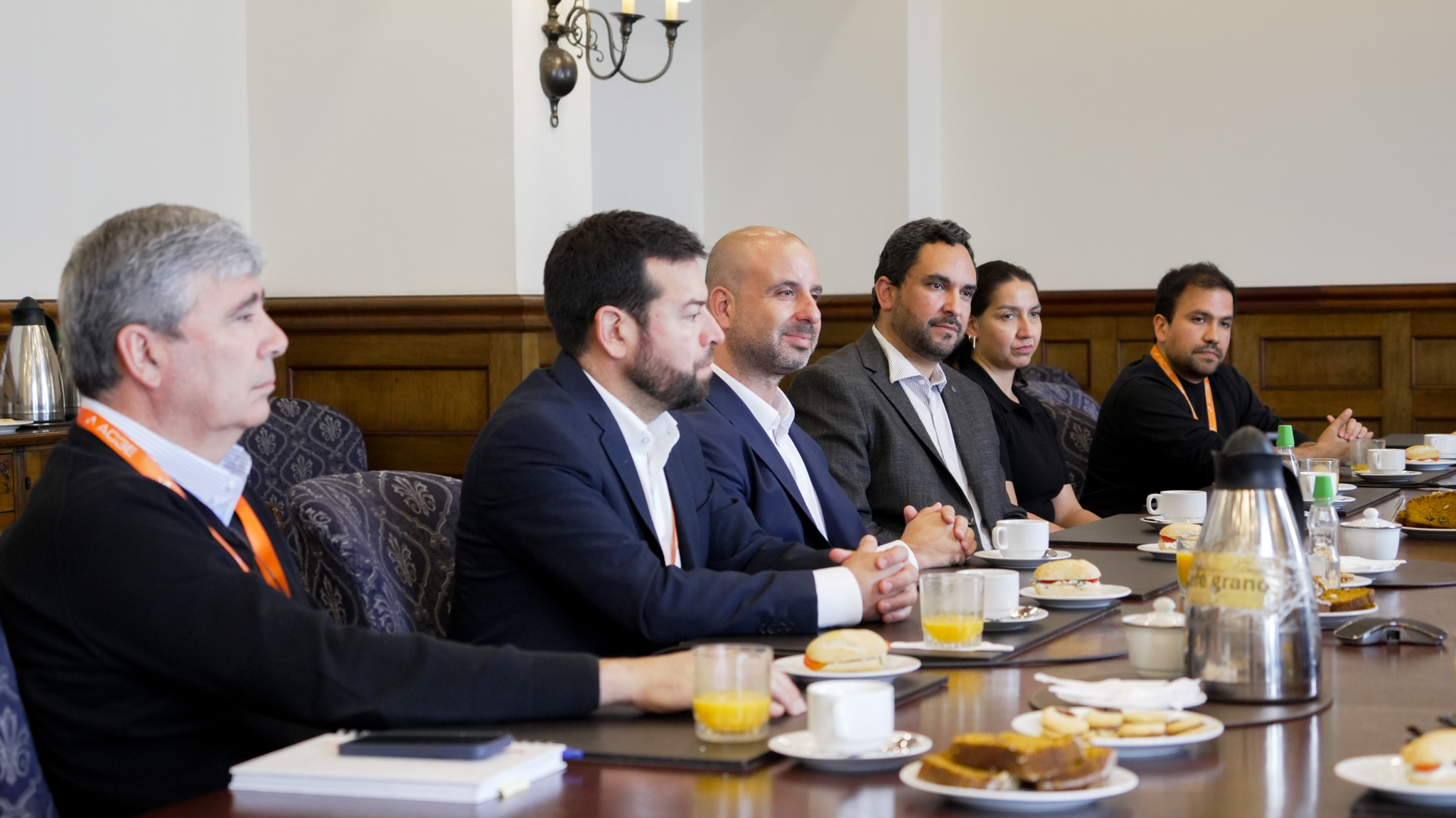
A laboratory with an applied focus makes it possible to connect research, education, and real-world implementation within a single space. Academics, students, and professionals working together on real problems, under real constraints, with the inevitable need to deliver solutions that function beyond the academic environment.
This approach delivers a dual benefit. On one hand, it opens new pathways for technology transfer and applied research. On the other, it gives industry access to deep expertise that would be difficult to develop independently.
One of the most significant -yet often less visible- impacts of initiatives like this is talent development. Not from an abstract perspective, but through hands-on experience.
When students and early-career researchers participate in real projects, they learn to identify meaningful problems, translate them into technological solutions, and operate in contexts where decisions matter. They gain not only technical skills, but also judgment, context, and a broader understanding of the role technology plays in society.
This experience is essential for developing professionals who can move seamlessly between academia and industry, and contribute value from day one.
%2016.26.53.png)
In the world’s most advanced technology ecosystems, collaboration between universities and companies is not the exception- it is the norm. Joint laboratories, applied research centers, and collaborative projects are structural components of innovation systems.
Chile still has ground to cover in this regard. That is why initiatives like this are not only positive, but strategic. They demonstrate that it is possible to build real bridges, with a clear focus on impact, long-term vision, and the ability to scale.
More than a standalone project, this laboratory has the potential to become a reference point and a replicable model- one capable of bringing in new actors and addressing increasingly complex challenges, both nationally and internationally.
Artificial intelligence will continue to transform industries, professions, and societies. The question is no longer whether it should be adopted, but how.
Betting on collaboration between academia and industry offers a clear answer: fewer silos, less rhetoric, and more real-world application. More joint work, and more sustainable impact.
Because the future of artificial intelligence is not built in isolation.
It is built through collaboration.
Follow us


